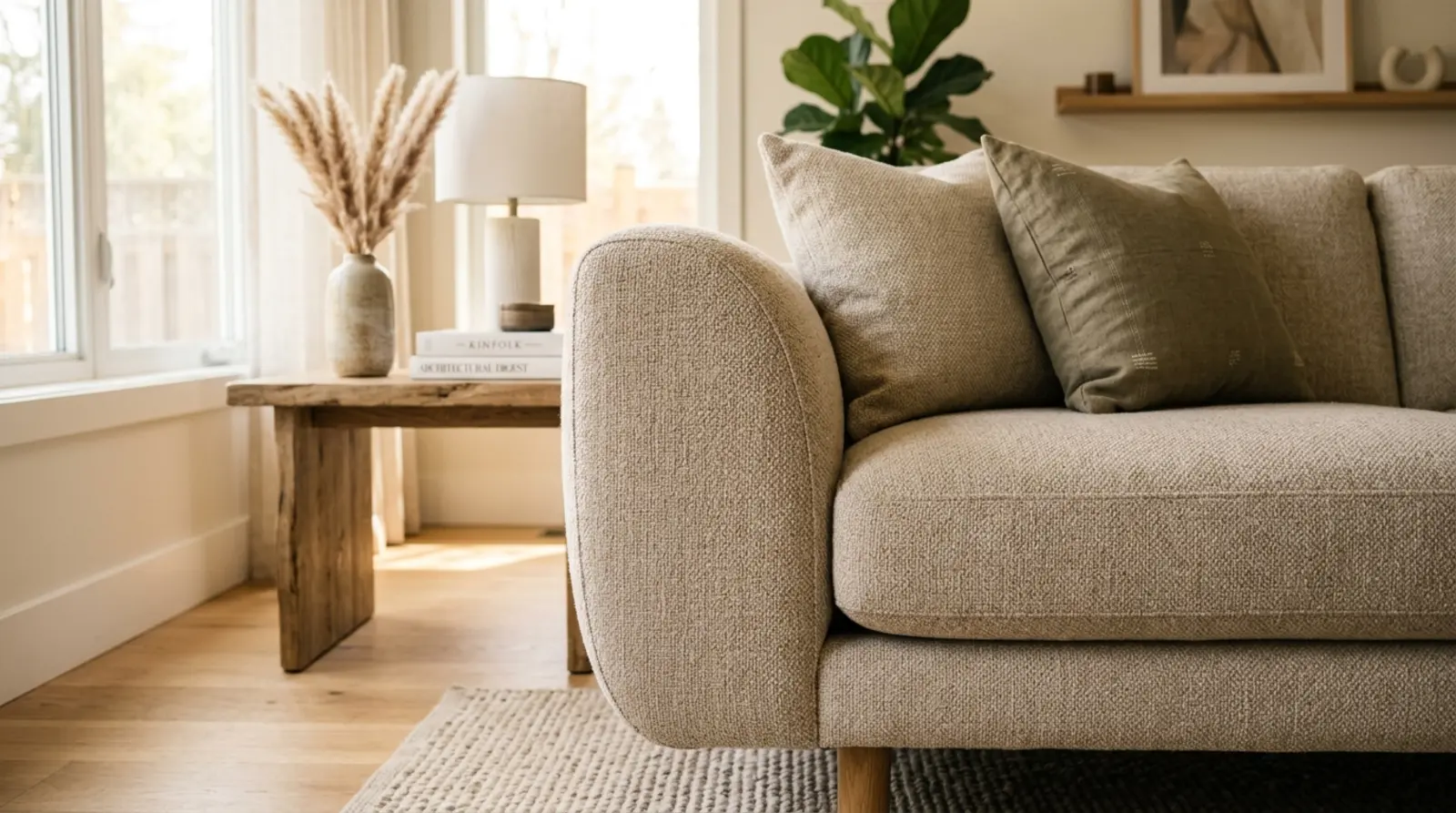
A couch in a busy house takes more contact hours in a month than the dining table takes in a year. Everyone sits in the same two spots, so the wear is never even — one end sags and darkens while the far cushion still looks nearly new, and that unevenness is what makes a couch read as old long before the fabric is actually worn out. Add the crumbs that work down between the cushions, the dog who has a favourite corner, and the fact that nothing here has ever been washed, and you have a piece of furniture doing the job of a carpet with none of the maintenance.
Most of what makes it look bad is soil sitting on the fibre rather than damage to it, which is genuinely good news. The dark band along the top of the armrest is body oil. The greyed patch on the seat is a mix of skin flakes, dust and whatever walked in on somebody's clothes. The shine on the arms is the same oil, oxidised. All three respond to the right pre-spray with enough dwell time. What does not respond is dye damage, sun bleaching along a window line, and marks already ground in by scrubbing — and an honest technician tells you which is which before you have spent anything.
The other half of the story is what has fallen down the sides. Crevices hold more debris than the whole visible surface, and on a family couch that means crumbs, hair, pet dander, coins, and the remote nobody has seen since autumn. All of it gets dry-vacuumed out first, because water turns loose crumbs into a paste that then has to be extracted twice. Sectionals get split apart so the joining faces are cleaned rather than skipped, and sofa beds are opened out so the mattress and the frame area are actually reached. Book it in and the whole piece gets done, not just the parts you can see.