Leather is skin, and like skin it depends on the oils inside it staying there. From the day it is made those oils migrate out — pulled by body heat, by ducted heating aimed across the room, by sunlight through a window, and by every clean that is done without putting anything back. As the hide dries it loses flexibility, and a hide that cannot flex has to crack instead. That is why cracking almost always appears first across the middle of the seat panels and along the front edge of the arms: those are the places the leather bends most every day. The dirt on the surface is a cosmetic problem. The dryness underneath is the one that ends the sofa.
The second thing going on is contact soil, and it concentrates in three predictable places. Head and neck oil builds along the top of the backrest, which is why that band goes tacky and darker than the rest. Hand and forearm oil does the same on the arms. And on pale hides, denim dye transfers off jeans into the seat — a genuine dye migration rather than dirt sitting on the surface, which is why wiping does nothing and why it needs a specific treatment. All three respond well when they are caught early. All three become much harder once oils have oxidised into the finish, which takes a couple of years of nobody doing anything.
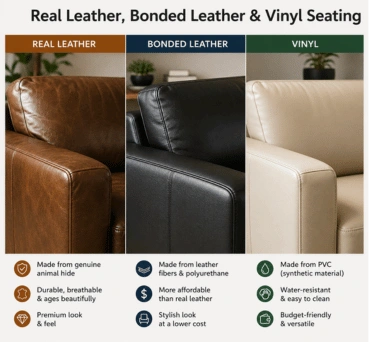
What we can do about any of it depends entirely on the finish, and most owners do not know which they have. Pigmented leather — the great majority of family sofas — carries a coloured protective coat, cleans well, and tolerates a proper conditioning pass. Semi-aniline has a light coat and needs a gentler hand. Aniline is unfinished, feels wonderful, absorbs everything, and marks if you look at it hard. Bonded leather is not hide at all: it is leather dust glued to a fabric backing with a polyurethane skin, and when that skin starts to peel there is no cleaning or conditioning that stops it. We identify which you own at the inspection and tell you honestly what is available, including when the honest answer is that nothing will help.